Narrative

I can’t believe this was released two years ago. I also can’t believe that I’m referring to things I wrote as being “released” but that’s a topic for another day… Mostly, I struggle with the idea of creating things that I love and am proud of but holding them back. There is the old adage of “If you’re good at something never do it for free” and while I can see wisdom in the statement, I am simply not that guy. This the full text of the narrative zine. If you like it enough, I do have hard copies available for purchase here – or share the link with someone who might enjoy it. Sharing human ideas is the thing I love the most about writing, about reading, hell, about being. I hope you enjoy, I hope it sparks something in you, and if you want – I hope to get some feedback, some suggestions of things you think I might like, or something that you have created and are proud of.
physical art matters.
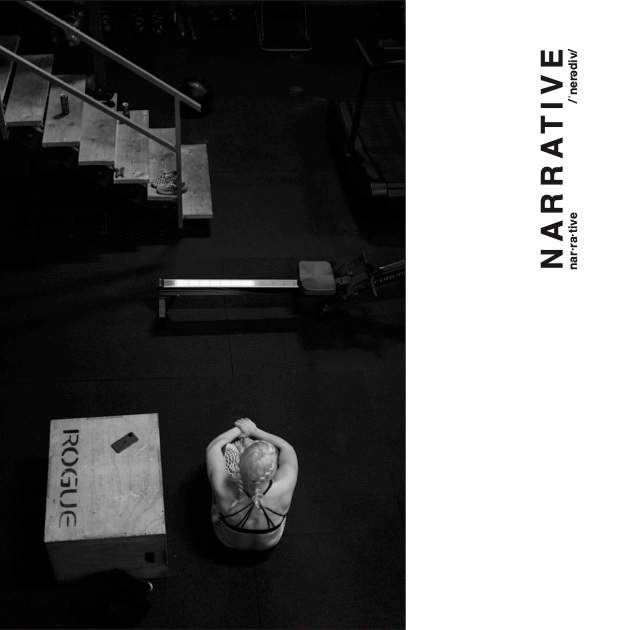
all models are wrong. some are useful.
– George Box
i would like to add to that:
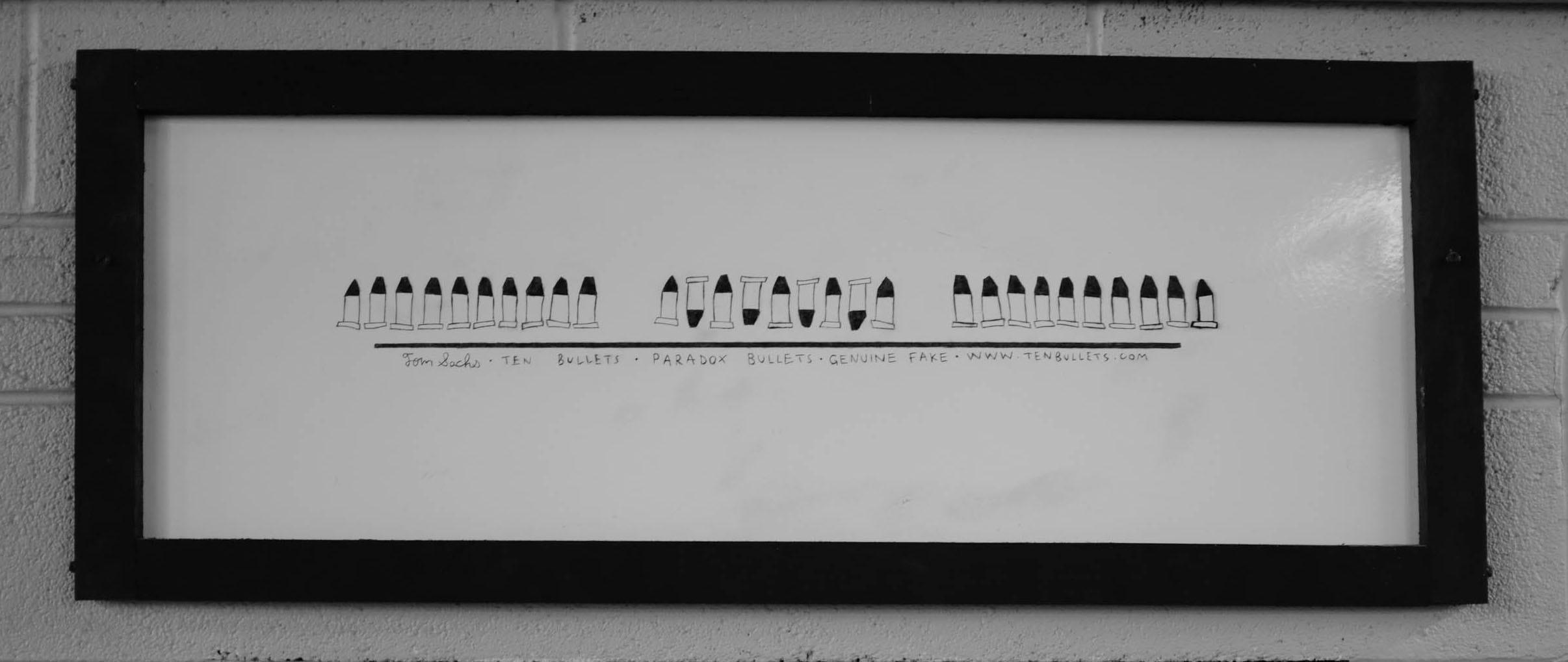
there is no such thing as a paradox, just bad models.
perhaps not bad… just incomplete.
a friend once described learning jiujitsu as experiencing a film by being given one frame at a time, in an almost random order.
pieces that we can only guess as to their order and relation.
snapshots of action, all context inferred.
are they moving towards something? or away?
creating space? or closing in?
the analogy was meant to help me with the feeling of being lost. to assuage the panic that comes from starting something new. a story that fits into my already lived experience, an access point to borrow the faith required to stay the course and keep learning.
this was not the first time i used a story to make sense of an unfamiliar situation.
knowingly or not, when provided with incomplete information we all begin to craft a story. a narrative to make sense of these pictures. we choose an aggressor, a protagonist and infer an objective. we try to make sense of what little information we have, we add pounds of assumption to ounces of fact. we base our predictions on this story that we invented, build a model around the stories we made up based on a glimpse of action…
it is often said that we don’t see things the way they are, but the way we are.
the assumptions we make are based on our own experience, we see what we have seen in the past. we pick out what we wish we had seen earlier. we make everything personal because that is how we see the world. we are each the center of our own universe. our mind uses our lived experiences to extrapolate, to predict, and to place us where it will be the most advantageous. the problem is that our predictions themselves can tip the scales, we become so prepared for an outcome that we invite it. we seek it.
the fear of something happening can seamlessly become the fear of it not.
entire identities built upon resistance. rebellion.
the fear of wasting our life, of wasting our time… of being wrong.
human behavior has always been wildly interesting to me – behavior under pressure doubly so.
pressure has a habit of exposing the limits of models.
one of the hardest things for me is to understand what “good” and “bad” really mean here. is a good model the one that is useful across the most scenarios? or one that causes the least friction between the modeler and their surroundings? What if the model is mostly useful and, on rare occasion, wildly destructive?
There is a difference between knowledge and action. A gap between understanding a thing and it actually affecting your behavior. So often, the statement of I know is functionally the same as I tried.
All models are wrong. Some are useful. All models are wrong. All models are wrong.
True and false, right and wrong feel like immutable things, things we shape our lives around. Things we accept and through that acceptance, alter ourselves. Models help us discern right from wrong, help us identify and act on truth – until they don’t. But models are not immutable. They are neither permanent nor sacrosanct. They are useful. Useful for me. Useful, for now. And when they aren’t, when they return bad information, point us the wrong way – well that is their nature. Their limit. And it is time to switch models.
perhaps i am not being clear…
zenos paradox of motion (also called the dichotomy paradox) basically states that in order to travel from point A to point B, one first must travel half way, and then half of that, and half of that… as we continue cutting halves ad infinitum eventually we realize that logic dictates no one can ever actually arrive at any destination, and motion itself is an illusion.
now, we all experience motion. it is an observable and actionable fact, but how can we experience what logic tells us cannot exist? therein lies the paradox.
now, there is perhaps a special order of physics that can explain the variation – or perhaps there is an explanation even more simple. perhaps it can all be the result of the observer applying a model poorly. moving “halfway” is not a universal truth. not a law of physics but an occasionally useful description, an observation. this observation, this description has no effect on the world. it has no weight or impact or control. in fact many of the most famous paradoxes are stories of individuals being confronted with the limits of their observational model, individuals who’s narrative slams up against reality and their response is at least performative confusion. there is an inability to accept that possibly there is a mistake, that they need to update their model.
watching people under stress is often watching them confront the edge of their narrative. there is beauty there. and knowledge. and opportunity.
is contradiction essentially the same process? a misunderstanding of the limits of a particular model? is a contradiction within an individual simply a sign that there is a different model at work? that the parameters have been misread and they are now operating out of bounds? That apparently being seen as wealthy was more important than actually being wealthy. That the benefits of being thought of as a “good guy” were actually the goal, and being actually good was just a convenient path – until it wasn’t. That we actually just wanted to have the thing, not do the thing – and have been quietly seeking a shorter path this whole time…
a model, like a map, is not the real thing. a 1:1 ratio map would be useless because it would offer no advantage, destruction by fidelity. a truly perfect model is not a model, but an experience. we use models to try and make sense of experience. to preview. to glimpse into a possible future. like the oracles we can peer through the shadows, past the veils into what might be. but our sight can go astray so easily. a model becomes useful because we remove what we deem unnecessary – use familiar stand-ins for larger concepts, and in judging the usefulness of certain bits of information, we impose parameters on our model. when we confront a personal paradox, a contradiction, a disagreement between model and experience, we are confronting the fact that we misread the map, or perhaps we simply grew beyond it. regardless of the reason, through intelligent growth or improper editing we have found ourselves out of bounds, in the woods, the weeds, off the beaten path and out in the cold. faced with the option to open ourselves to the vulnerability of learning, or to harden our resolve and press again into the breach.
too often the response to contradiction is to clutch the map and ignore the terrain.
to grasp at old ideas in the face of new information.
these models function as our safety objects. they help us make sense of the world. we spend a lifetime curating and nurturing them. they are precious to us.
this saved my life. this made sense of a scary world
the trap of a model is well known, if poorly stated. everyone has heard that the way you boil a frog is to put it in a pot of lukewarm water and slowly turn it up. the small changes will never cause alarm, the infamous “slippery slope” where tiny acquiescences invite tyranny and ultimately death. the funniest thing about this parable is that it simply wouldn’t work. i couldn’t find one credible instance of this, in fact what happens is, when you think about it, quite obvious. the frog stays in the water until the precise moment when the cost of staying exceeds the cost of moving. the frog has nothing to prove. the frog isn’t trying to be morally consistent about the safety of a certain pot of water. the frog isn’t going to feel ashamed that it should have seen this coming. the frog doesn’t trust that whoever controls the temperature of the water has its best interests in mind.
the funny thing about that parable is that while apparently you can’t slowly boil a frog alive, there is a chance it would work on a human.
the fear of change causes us to clutch at models that are actively destroying us.
the fear of being wrong robs us of the chance of being right.
so much pain and frustration is caused by this refusal to see the world as it is. so much conflict is rooted in the stories we tell ourselves. in the incompatibility of different models. we tear each other into pieces for not being afraid of the right things, for not caring about the right things, for not reinforcing each others models. we reduce every other person in our lives into players in our narrative. set pieces. foils and stock characters. we tell our own story through reducing or elevating others, shaving and shaping their existence to elevate and define our own story.
there is a problem here though.
A paradox even.
while i am convinced that so many of the problems we face, so much pain and frustration can be laid at the door of our refusal to update our models – some of our best moments as human beings stem from the same place. for what is love? what of loyalty? what of hope and faith and forgiveness? we choose a model and apply it in the hope that it will shape the world. we choose the model in spite of the terrain, walking confidently with the belief that the world will bend around our footsteps. that objective facts will yield to our spirit.
the hubris.
the humanity.
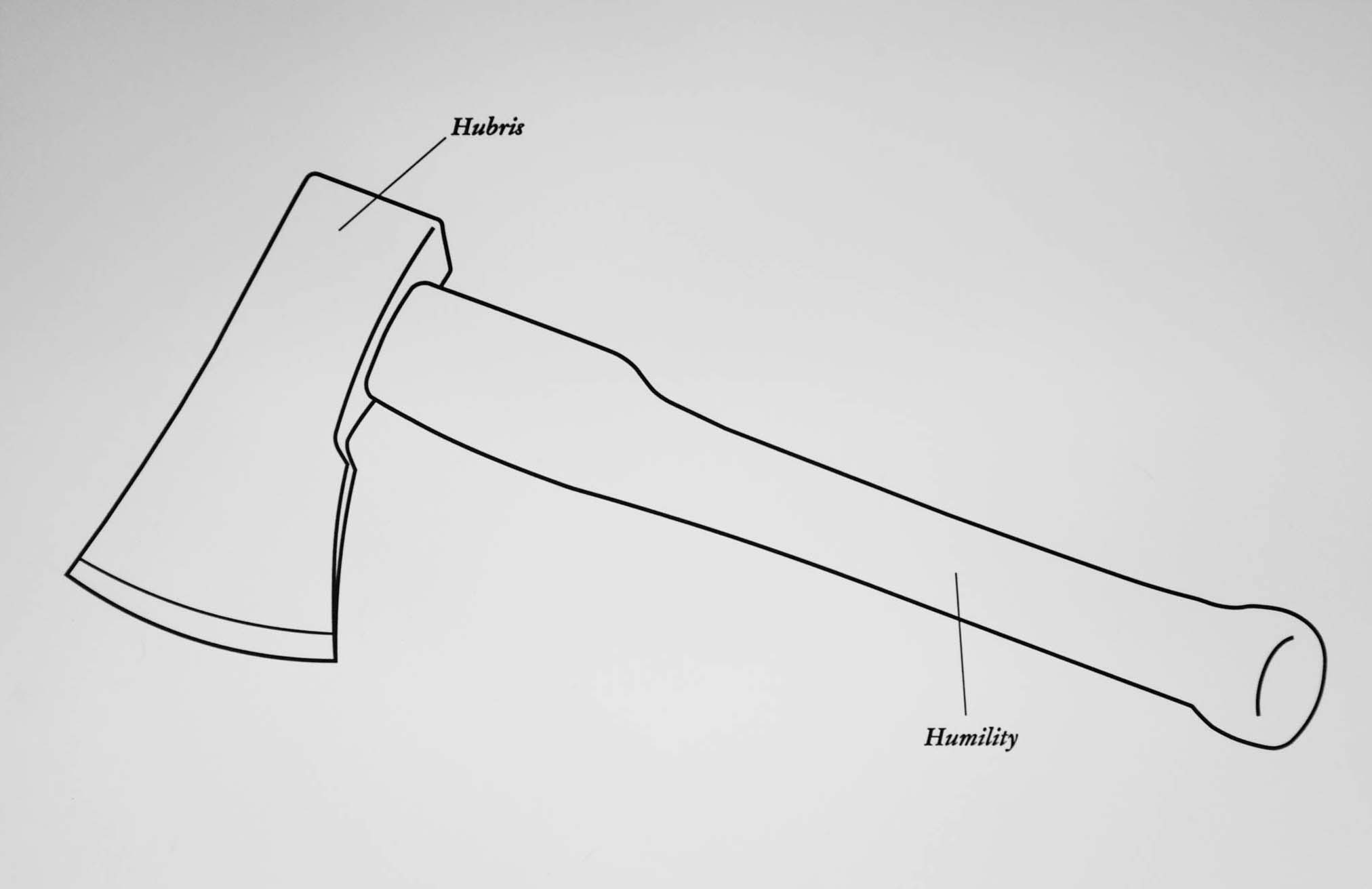
the power of narrative. the power of our models. like prometheus, like fire… the ultimate tool of creation and destruction. the source of so much pain and so much beauty.
perhaps a paradox isn’t a failure, but a joke.
a warning.
a reminder that our greatest tools can lead us comically astray if we are not careful.
language is imprecise. assumptions are too often invisible.
observation is not the same as control.
hubris and humility are not opposites, but compliments. like a lever and a fulcrum – they function as parts of the same machine. each alone can only take you so far.
narrative without empathy is narcissism.
sensitivity. acceptance that everyone is writing their own story. that you – that we are all are but players in each others tales.
to make use of leverage we must know which end of the lever we are holding.
awareness, and the capacity to act on it.
we craft our stories with only the most tenuous relationship to facts, we do this because we are human. we do this because it is helpful. because it is necessary. it is our gift and our curse.
so what is the best narrative? is it the most honest? or the most useful?
a myth is simply a lie with a purpose. a leveraging of our psyche. a deviation from the facts to convey a larger truth.
honesty through omission.
your narrative is a map. a tool.
it is a framework, rotating around a central point.
most of us only see it in pieces, a snapshot or a glimpse in a reflection. frozen in time and perspective.
we claim to adhere to objective truths, that we are just responding rationally to facts – but objectivity is an illusion. perhaps not an illusion, but a construction.
another model.
we decide what is important and what isn’t. we create rules, parameters, a framework of action and reference. the complications lie in our assumptions. altitude can have an effect on chemistry, but not math… right? but enough altitude can effect time, but not enough to matter… usually. the phase of the moon impacts tides, but not how medicine works… right? we have run tests, we know that some variables just don’t matter… right?
what we measure matters. but what about those things that don’t translate easily to a table? those things that we cannot measure, or cant even imagine enough to try. we have also studied placebo effects, we try and correct for the fact that the participants belief in a study will often change the outcome. what about the belief of the person providing the intervention? of the person who harvested the ingredients for the medicine?
this is not to argue that none of it matters, that all models are wrong and therefore equal. no, what i mean to convey is that all models have parameters, and understanding those parameters is vital when trying to utilize said model. we talk too much of being right and not enough about how we got here. we argue about the answer but seem incapable of discussing our work to get there. the framework. the world that shaped our models… this is where communication can really happen, where we can finally uncover the conversation behind the conversation.
see, narrative is a force. it is a tool. a lever. it helps us make sense of the world. it assists us, magnifies our efforts through time. it is an extrusion. like another dimension, it adds weight and connects lines. it permits us to move between points. it can help us make sense of things, provide us with a new vantage point, another avenue to see. it is nearly impossible to change your nature, narrative gives us another path. we can use it to reframe problems, to write new behavior as more “in line” than the habits we are trying to break. if we are able to identify the thread that carries through all our stories, we then know how to better shape the ones that we strive to embody, the ones that come next. understanding our motivation allows us to have more meaningful conversations, with each other and with ourselves.
for we are all just stories. we are maps and models and something more. we are agents. forces of beauty and chaos. a story is not a problem. stories don’t have solutions. narratives are more than collections of information. life doesn’t have a meaning just as a story doesn’t have meaning. telling a story gives it meaning. living a life gives it meaning. a story has perspective, knowingly or not, deliberately or not – our stories communicate what is important. where we have been, where we want to go, and where the dragons lie.
stories. maps. vehicles for sharing our unique perspective. universal truth is a perch too high to to claim, and possibly futile to attempt.
perhaps we aren’t meant to.
perhaps each of our stories is a thread. a piece of a greater structure. something to be shared, woven, brought to the front or tucked behind. the point of a map is not to be true, but to be useful. to help us and others. it is a mistake to think that being right carries some universal value – that it makes your story somehow stronger, more valid than anyone else’s. Don’t get me wrong, there are instances where objective truth is important, but bringing up truth within a narrative is most often an effort to stop a conversation, not to start one. Discussing truth is too often an attempt to skip ahead, skip the story and jump right to understanding. Destination without travel, to be without all the mess of doing.
The problem is that all we are is doing. Being. We are a process, not a goal. We know nothing. A brain in a box. Electrical signals interpreted. Truth, reality, these things are built through stories. Emotional responses are a shorthand, a reaction to information and a preparation for what comes next. Signals are made solid, matter created because of what we feel.
This gives us amazing power as a storyteller. We are constantly curating our past, building our stories one day, one interpretation at a time. We tell ourselves what is important, what led to what led to what. We build a narrative and then respond to it. Again, to be clear: We are responding not to what is but to what we feel. Not what happened but what we think happened, and how we feel about it. Stories are our opportunity. Our chance to put our thumb on the scale. To take what happened and shape it, and ourselves, into what happens next.
This isn’t The Secret. Not a hack or a insight into building wealth but an understanding of the mechanisms of our biology. Honoring the process that has brought us this far by choosing to be a participant in its expression. To change and be changed. To believe enough in ourselves to be willing to listen to others. To understand that the “whole” is more like a tapestry woven of all of our stories. It takes confidence to change. Confidence to listen, to let yourself be tucked into the background and witness someone else. to believe that there is a different experience than your own. To see yourself as a minor character in their story. Or even a villain. To listen and think and understand… and to find a way to fold that in to your next story.
The difference between medicine and poison is most often a matter of timing and dosage.
To be able to listen and receive and to share and shout and stand your ground.
Different models but in service of a greater goal.
There is an easy arrogance that comes with the idea of right, with true and correct and eternal. Words that seem synonymous until one of them is used against you. All joy comes with loss, hope itself comes with despair… I was once told that stress is a consequence of giving a fuck – that self-doubt is the greatest protection from true hubris. Without the need to commit to these ideas, this makes for less of a paradox and more of an ecosystem. A relationship. We contain multitudes, and a lifeguard saving someone from drowning is not a statement against getting in the water.
A paradox, to me, is an edge. A breakdown of my current model. It is an opening. An invitation to think bigger, to expand my map. A story, to me, is a map of another kind. It is an explanation, a guide more useful than any list of truths one could muster. A story is open, it is flexible and formative. A good story is, in many ways, unfinished. It is malleable. Interpretable. Personal. Small facts are turned into feelings, and those feelings fuel more stories. Like a fractal, an expansion of experience. As infinite as we allow it to be.
Purpose is a scary thing. Sharing is a scary thing. We.. I… want to be seen as helpful. As insightful and thoughtful. I want to be liked. I want success, or at least success as I define it. This particular story is vague, messy, it doubles back and seems to contradict itself even while rallying against the whole idea of contradictions. It is at moments anti-science, and can be seen to agree or disagree with just about any ethos the reader brings…
And at present, I stand behind it. With parameters, of course.
These words, these ideas are important to me. Vital even. I cant totally explain why, but they seem to matter. Seem worthy of sharing…
Words are important. Words carry assumptions and inferences, they shape the way we think and what we think is possible. Thinking in the terms of a storyteller can give us some much needed perspective, to see our lives through the eyes of someone else. To see our map, to see what is important and what may be missing. These words, these ideas that mean so much for me are both a site of power and of vulnerability. Our stories make us strong and easy to manipulate. What makes us consistent also makes us blind. These are not bugs, but features. Openings for growth. Choices we make as storytellers to build a worthy narrative. Life is hard and scary and uncertain. Fear and doubt make us seek permanence, seek reassurance in absolutes and outside rules.
The role of a storyteller is a half measure, a framework, a model that is a little more forgiving, a little more steady without the need for absolutes. It fits, for me… for now… and I think that is the point.
Models are by nature imperfect and impermanent.
And so are we.
Good luck.
the stories we have, the models, were for the most part given to us. in an attempt to make sense of the world we took what we were given and did our best. that is to be expected, celebrated even. but as we grow is is up to us to imagine something greater. to examine the priors, to operationalize our definitions. to unpack the baggage of history and language and the shortcomings of those who came before. so ask questions. relentless questions. why you have these beliefs? who gave you these definitions and what was their objective?
how many of your truths were simply stages of growth, models that proved their use by allowing you to grow beyond their bounds?
how many of your realities are actually assumptions?
and do these models still serve you?
is there something better?
leaving that which no longer serves you is not being inconsistent.
refinement is a process and is rarely linear.
stories. models. paradoxes.
frameworks of understanding.
scaffolding.
the bones of what we are and what we experience.
start there, the rest is easy.
the same process, but each a unique experience. there is too much to do, too much to know.
so we work.
so we listen.
so we share.
behind each of us is a story, a narrative of creation. lessons and lovers and loss. we owe it to ourselves and to each other to share these stories. to share our experiences and help each other paint grander pictures.
the spear is often thought of as the first human tool. or the club. a focus and a lever.
a force multiplier. a reflection of our primal urge to do damage.
but what if it wasn’t?
LeGuin posits a different theory. that the first tool was a bag. a gourd. a basket. a tool for extending ones capacity. not to do damage, but to hold. to move and to carry.
to provide.
she even extended the metaphor to storytelling. for what is a story but a way to gather and transport useful ideas? a way to transport each other, to nurture and to commune, to make trades and to display trust. to multiply the forces of love and learning, of hope and knowledge and history.
i cannot express how grateful i am for those who shared their stories with me. for those people who helped me learn to tell my own story. through words, through pictures, and even through movement.
i’ve always found it easier to remember a story when it leaves a bit of a scar.
not scars – per se. but reflections. little pieces of the people i love that have become part of me.
emotional content. tears or laughter or moments of quiet company so solid you can build monuments on them.
friends. lovers. enemies.
the names are important to me, but wont be to you. and that is fine.
they are etched in my heart forever.
a voice at my back. a hand guiding my hand.
company, and confidence.
energy, and encouragement…
.. a story then.
one that i have found helpful.
imagine, if you will – every teacher you have ever had. your parents and grandparents. your ancestors. your friends. everyone who has sacrificed something for you to be where and what you are. like smoke. gentle shadows. hands on hands on hands. every meal you have eaten, every blade of grass you have stepped on. the people who you love and have loved you, the people who you have helped, and those whom you have hurt while learning to do better.
you are an embodiment of both sacrifice and hope.
your actions are propelled by them, empowered.
you contain multitudes. you are legion. an entire watershed gathered into a mighty river.
it is power. vast and personal.
but it is also a responsibility. not just love but loss and destruction.
they are not so i can be.
not an accusation, but an extension of faith.
if all of those entities were gathered, a vast sea of energies – what could i tell them?
what did i do with their gifts?
as much as i hate it, i have always been a performer.
i know the story i want to tell, i know i want to make them proud.
the way i see it, the path is actually quite clear...
...all that is left is the action.
burkey - owner/operator of Station515 || ferndale, mi || www.station515.com || physical objects